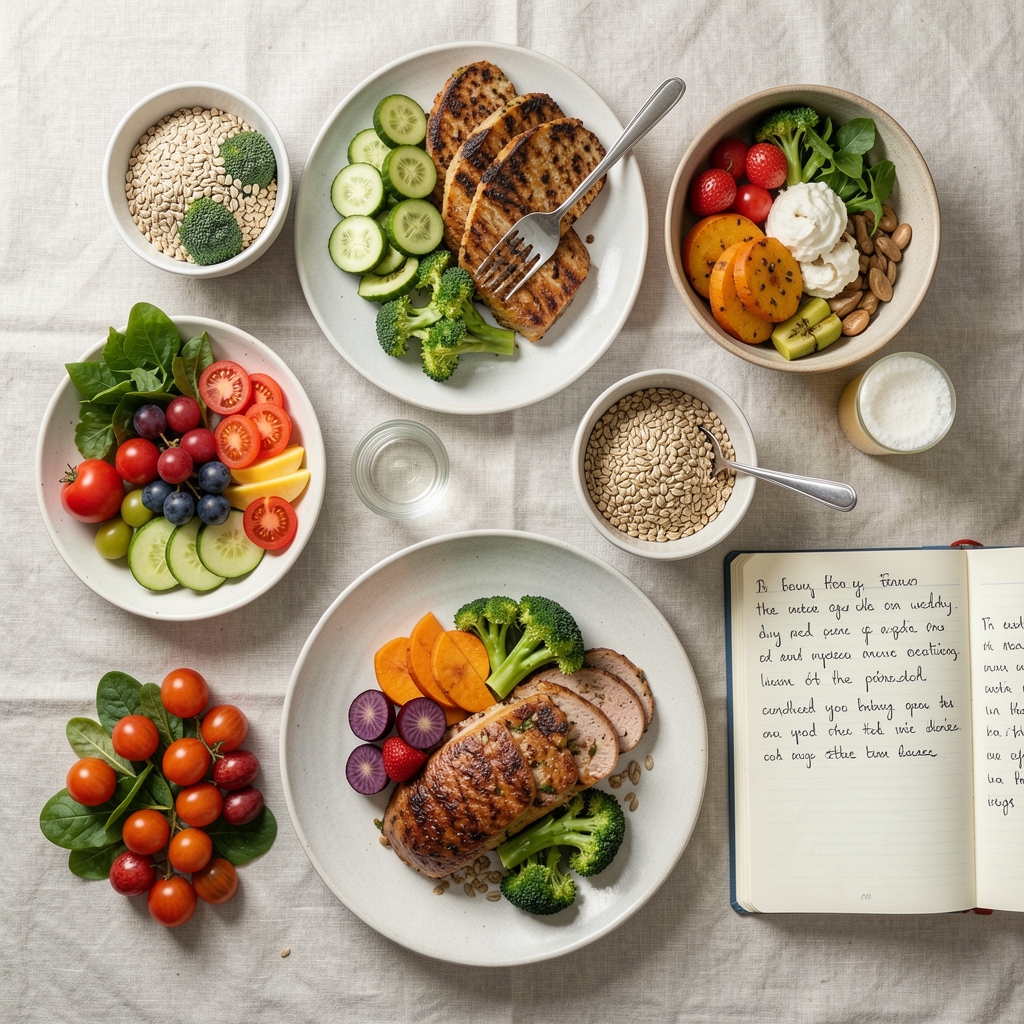
Eating Patterns
The Weekly Rhythm of Food and Its Relationship to Weight
Eleanor Whitfield
·
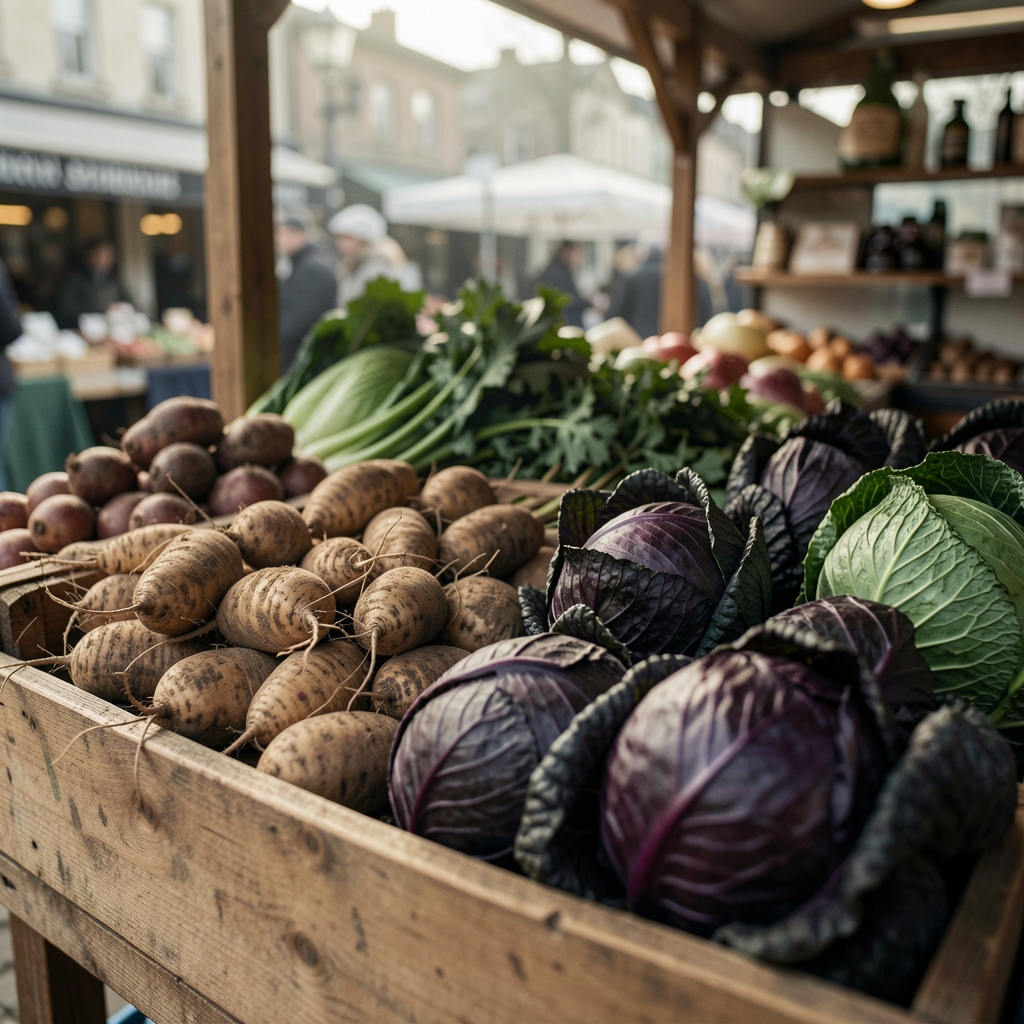
London, February 2026. The market stalls at Borough and Exmouth offer, this Saturday morning, a narrower range than July — but the narrowness is instructive. What remains is what the season permits: swede, celeriac, cavolo nero, sprouts still on the stalk, blood oranges from Spain, forced rhubarb from Yorkshire. A nutritionist's weekly plate, assembled from these materials, tells a particular seasonal story about weight and daily diet.
The concept of seasonal eating is older than nutritional science, but it acquires renewed relevance when examined alongside patterns of weight awareness. A weekly diet structured around what is genuinely in season — not what is available year-round in a supermarket, but what a specific month and geography produce — imposes a natural rotation of vegetables and fruit that distributes nutrients across the year in ways that no single-season approach can replicate.
In February, the available produce in England is predominantly root-based and brassica-rich. Swede, celeriac, parsnip, and turnip contribute substantial dietary fibre alongside complex carbohydrates that support a sense of fullness between meals without requiring large portions. Dark leafy greens — kale, cavolo nero, January King cabbage — provide concentrated nutritional variety within modest servings. Forced rhubarb, tart and vivid against the grey of the season, completes a February fruit profile that is nothing like August's abundance but is complete on its own terms.
The nutritional logic of eating what grows — or what winter stores make available — is not merely romantic. It produces a rotation of food categories across twelve months that resists the repetitive mono-nutrient patterns that develop when a household relies on the same six vegetables regardless of season. Repetition in diet, documented across food journals, correlates with a gradual disengagement from the act of eating — a reduction in the attention brought to meals that in turn contributes to unmonitored portion size and, over time, to observable weight drift.
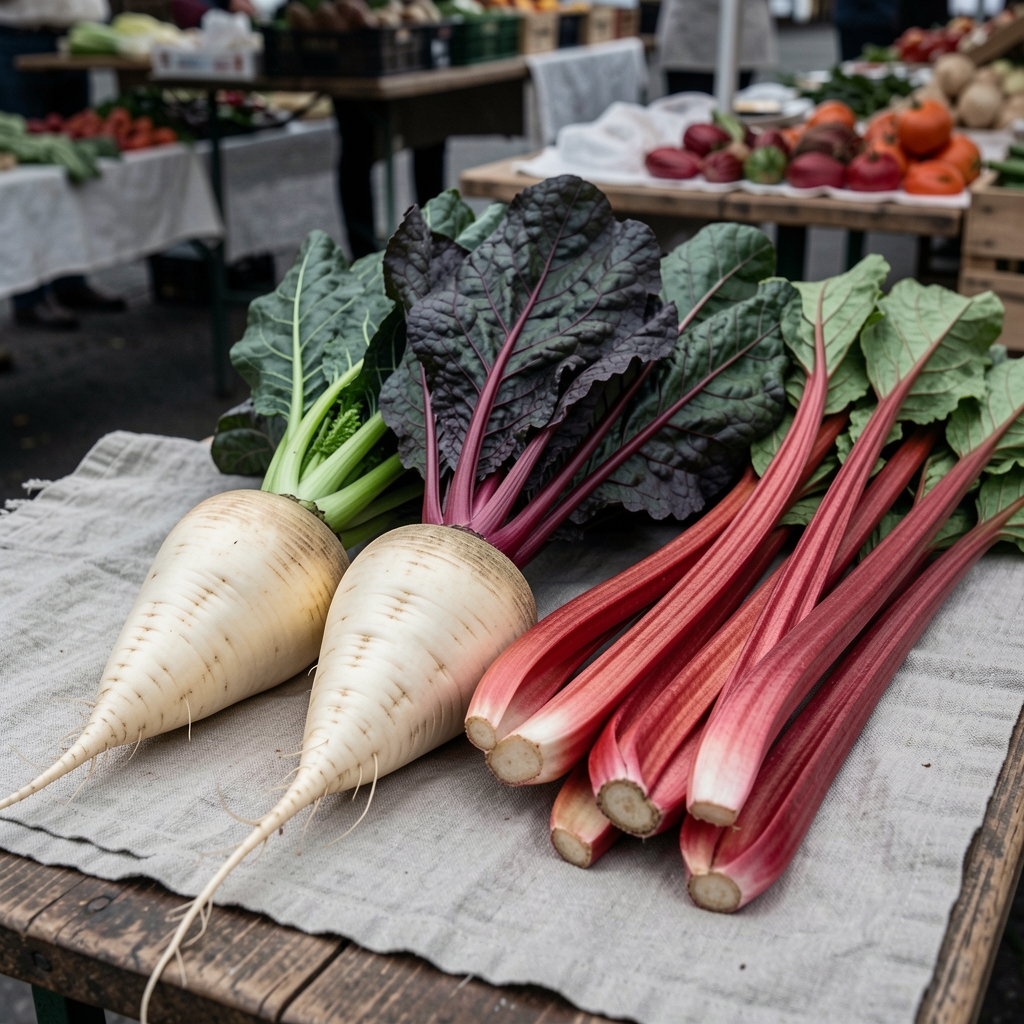
Borough Market, London — February 2026
Constructing a week's worth of meals from February's available produce is not an exercise in austerity. It is, rather, a challenge of creativity that — when taken seriously — produces a nutritional profile well suited to the month's particular physical demands. February in London is cold, dark, and typically lower in physical activity for many people. The foods the season provides are, correspondingly, more calorie-dense per serving than summer produce, richer in slow-burning carbohydrates, and better suited to longer, slower preparations.
A roasted celeriac with preserved lemon and fresh herbs, served alongside a small portion of white beans cooked with kale, represents a plant-based meal that is nutritionally complete, portion-controllable, and deeply satisfying in the cold. A swede and parsnip soup, finished with good olive oil and eaten slowly, supports a sense of fullness that outlasts the meal itself by two to three hours — a property directly relevant to portion awareness and the overall daily caloric picture.
The plant-based meals that February makes available are not the bright, light preparations of summer. They are heavier, warmer, more complex in preparation — and this complexity is itself relevant to weight awareness. A meal that requires forty-five minutes to prepare is eaten more attentively, in a calmer state, than one assembled in five. The body's signals during and after eating register more accurately when the eating is unhurried. This is not a conjecture; it is a documented observation across the journalling records.
"February asks the cook to slow down, and in slowing down, the plate becomes a more deliberate record of what the body actually requires."
— Eleanor Whitfield, Tarbolan Letters, February 2026
Winter fruit intake is one of the more commonly neglected aspects of a seasonal approach to diet. The abundance of summer — berries, stone fruits, figs, melons — creates an expectation of fruit as plentiful and immediate. February requires a recalibration. The available fruits are fewer, but their nutritional profiles are no less relevant to a daily diet and weight awareness framework.
Blood oranges, available in London from Spanish and Sicilian growers through February, are among the most nutritionally dense of the citrus family. Their anthocyanin content — responsible for the deep crimson pigmentation of the flesh — contributes to the dietary variety that seasonal eating provides. Eating a blood orange in February as opposed to a standard orange in any month is a small but documentable act of nutritional diversity. Over a year of such choices, the accumulated diversity is significant.
Forced rhubarb — grown under candlelight in Yorkshire sheds in the cold dark — arrives in markets with a particular quality that outdoor-grown summer rhubarb does not possess. Its tartness requires minimal added sweetness when prepared thoughtfully, making it a useful dessert ingredient for households managing their overall sugar intake. A poached rhubarb with a small amount of honey and a spoonful of whole-milk yogurt represents a dessert that supports dietary variety without disrupting the overall pattern of a low-sugar week.
There is a documentary argument for market shopping that goes beyond the nutritional qualities of the produce itself. The act of visiting a market — walking between stalls, handling vegetables before purchasing, making decisions based on what looks best rather than what is pre-packaged — imposes a deliberateness on the weekly food acquisition that supermarket shopping does not. The deliberateness carries into the kitchen.
In the food journals kept across the observation period, weeks that began with a Saturday or Sunday market visit showed a distinctly different pattern of meal preparation throughout the following seven days. Market-sourced produce, bought in the knowledge of its provenance and handled with familiarity by the seller, prompted more frequent home cooking than pre-packaged equivalents. More home cooking, as documented previously in these letters, correlates with greater portion awareness and more attentive eating.
This is not to suggest that market shopping is necessary for nutritional balance — it is not, and there are excellent supermarket sources for seasonal produce. The observation is that the ritual of the market, for those who have access to one, functions as an anchor for the week's food rhythm. It marks Saturday morning as a nutritionally intentional moment, a reset after Friday evening's potential disruptions, and a preparation for the week ahead.

Saturday market purchase — London EC1, February 2026
The argument for a seasonal produce approach to diet and weight awareness is, ultimately, an argument for variety imposed by nature rather than chosen by convenience. Left to habitual preference, most households settle into a rotation of ten to fifteen foods — reliable, fast to prepare, unambiguous. Seasonal eating disrupts this habitual selection six to eight times per year, as new crops arrive and old ones recede.
Each disruption is a nutritional opportunity. The arrival of asparagus in April, of broad beans in May, of courgettes in June, of tomatoes in July and August, of squash in October, of sprouts and root vegetables in November — these are not merely aesthetic moments in the calendar. They represent a structured rotation of fibre types, micronutrient profiles, and energy densities that, consumed over a full year, contributes to a nutritional balance no single-month diet could produce.
For the nutritional observer, the seasonal calendar is a resource. It provides a natural prompt to adjust the weekly plate without requiring the imposition of a structured eating programme. The season itself does the work of changing what is available, making variety the default rather than the exception.
Tarbolan Letters is an independent editorial publication focused on everyday nutrition and weight awareness. The publication is not affiliated with any commercial, governmental, or institutional body. Articles reflect the writers' independent observations and are reviewed by a second editor before publication.

Eleanor Whitfield is the founding editor of Tarbolan Letters and a qualified nutrition professional based in London. Her field observations on seasonal produce span four years of weekly market visits and food journalling across all twelve calendar months.
More from Eleanor Whitfield →